

The dominant paradigm in drug development has been: one disease, one target, one drug. For single-target diseases, this works. When a disease has a single dominant driver, a single intervention can be curative. But most diseases are not like this. The biggest unmet needs in medicine are driven by networks.
Fibrosis. Neurodegeneration. Autoimmune disease. Chronic inflammation. The diseases with the biggest unmet need share a common trait: they are not single-pathway diseases. They are driven by multiple biological programs going wrong simultaneously, reinforcing each other in self-sustaining loops. Block one pathway, and the others begin to compensate. The disease adapts and finds an escape route.
This is not a controversial claim. It is the consensus view among researchers who study these diseases. The controversial implication is what it means for drug development: that the single-target approach, which has dominated pharmaceutical R&D for decades, is structurally incapable of solving these problems.
Medicine’s next era belongs to multi-target therapies.
The platform to build them does not exist yet.
We're building the therapeutic platform for multi-target RNA medicines. And alongside it, we're advancing the frontier AI to make it predictive.
SymphoRNA is the first platform purpose-built for multi-RNA combination medicines: therapies that combine multiple RNAs (mRNA, siRNA, and more) in a single treatment. Our platform pairs a novel polysaccharide delivery system with a multi-RNA combination engine and an AI layer designed to navigate the combinatorial explosion of multi-target design.
In the last 12 months, we have validated this thesis at every level: from mouse models to patient tissue to non-human primates. Here is the logic, the evidence, and the path forward.
To best control disease, we need to use nature’s language: RNA
If complex diseases require simultaneous intervention across multiple pathways, the question is which modality is best suited for this. RNA is fundamentally designed for this.
Compared to other, more traditional therapies, RNA is strikingly different. It can silence disease-driving genes using siRNA while simultaneously activating missing repair programs using mRNA, and modulate upstream regulatory circuits using other RNA species such as lncRNA. It solves both the hardware (what the cell is built of: structural proteins, extracellular matrix components) and the software (what the cell is doing: gene expression programs, signalling cascades). And because RNA is programmable, you can change which targets you hit without re-designing the molecule.
In contrast, small molecules have become impressively selective, but roughly 80% of disease-relevant proteins remain undruggable by conventional approaches, including transcription factors, scaffolding proteins, and non-enzymatic targets that lack suitable binding pockets. And hitting multiple targets with small molecules typically means combining multiple molecules, each with its own broad pharmacokinetic (and side-effects) profile.
Antibodies are precise and increasingly versatile, but are largely limited to extracellular and cell-surface targets. While some can activate receptors, they cannot restore a protein the body has stopped producing.
Gene therapy can address root causes, but makes permanent changes to DNA, which is not suited to diseases requiring ongoing, tuneable management over years.
mRNA–siRNA combination therapies have not yet entered clinical development, to our knowledge. The constraint has not been conceptual novelty, but the practical barriers of delivery, regulatory control, and target selection have been formidable. These challenges are now concurrently addressable, which is precisely what our platform enables.
True Synergy
The first and most important proof point was demonstrating that combinations of targets can produce effects qualitatively different from the sum of their individual contributions.
When three precisely selected RNA targets are combined, the transcriptomic response in models of fibrosis show clearly that no individual RNA is capable of producing that same gene expression change that correlates with the strongest therapeutic efficacy. Data shows that these harmonising pathways activate with synergy, yet remain silent under any single intervention. This is not just additive benefit. It is genuine emergence: the combination accesses biology that is invisible to single-target approaches.
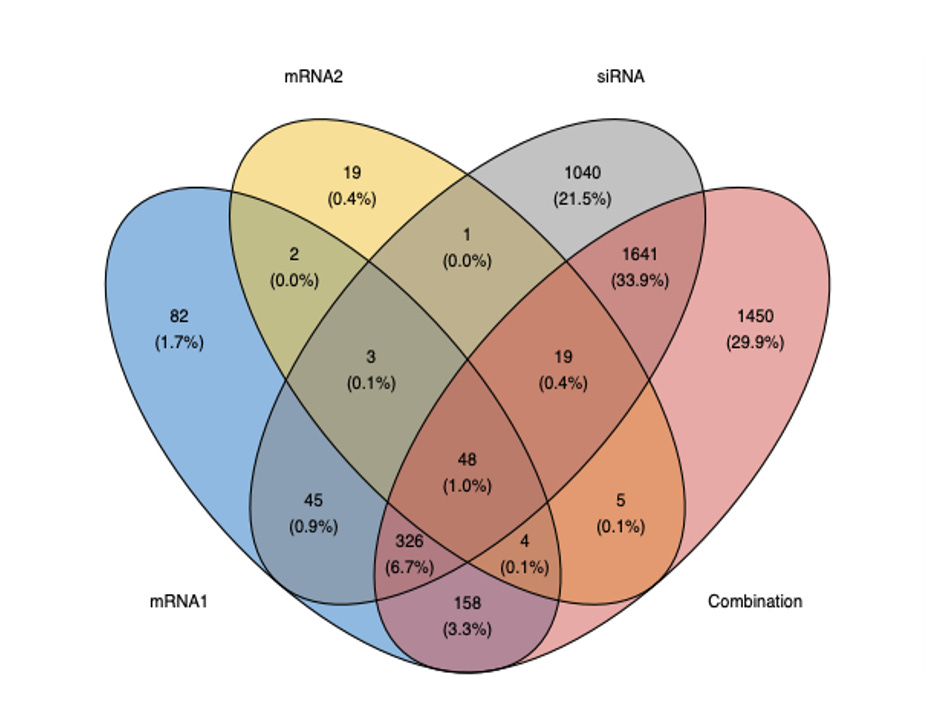
Our RNA combination modulates a focused set of disease-relevant genes compared to individual targets alone. When we compare to standard of care (Nintedanib, Pirfenidone), we see a very different transcriptomic profile, with activation of genes that are associated with the side effects patients suffer
The delivery bottleneck
The dominant delivery system for RNA therapeutics, the lipid nanoparticle (LNP), was engineered for acute use. They work brilliantly for COVID vaccines, where one or two doses suffice. But complex diseases are chronic. They require treatment over years, potentially decades. And here, LNPs hit a fundamental limitation.
Nearly all LNP formulations contain PEG (polyethylene glycol) as a stabilising coating. Repeated administration triggers anti-PEG immune responses, a well-documented phenomenon called accelerated blood clearance (ABC). With each subsequent dose, the immune system recognises the PEG, opsonises the particles, and clears them faster. Less RNA reaches the target tissue. Efficacy declines with every administration. For a chronic disease where the patient needs treatment indefinitely, this is not an optimisation problem. It is an architectural incompatibility.
There are additional constraints. LNPs exhibit burst release kinetics, delivering their payload in a rapid spike rather than sustaining therapeutic levels over time. For chronic diseases where consistent, prolonged gene modulation is needed, this pharmacokinetic profile is a poor fit. Co-formulating multiple RNA types with different molecular properties (size, charge, stability) in a single LNP while maintaining the activity of all payloads remains an unsolved formulation challenge. Achieving organ-specific delivery beyond the liver requires complex surface engineering (SORT lipids, antibody conjugation) that adds manufacturing complexity and cost. And LNPs typically require cold-chain logistics, typically at minus 20 to minus 80 degrees Celsius.
This delivery bottleneck is one of the key reasons multi-RNA medicine has remained theoretical despite years of scientific interest. The therapeutic concept is sound. The biology supports it. But without a delivery system purpose-built for chronic, multi-target use, multi-RNA cannot reach patients.
Add some sugar, not just fat
We built a completely different delivery system. Instead of a lipid-nanoparticle, we use polysaccharides (modified sugars). The choice was not arbitrary. Polysaccharides are among the most abundant biological molecules on Earth. The human body utilises them, metabolises them, and clears them safely through existing biological pathways. They are biodegradable, breaking down into simple sugars that the body can use. Importantly for therapeutics, they do not trigger the PEG-mediated immune responses that limit most LNPs.
Our polysaccharide delivery system has several properties that make it specifically suited for multi-RNA chronic therapy:
It is safe for repeated use. In mouse studies, we have administered daily doses at high therapeutic levels with no adverse effects. The body does not build up an immune response over time. Each dose delivers as effectively as the first.
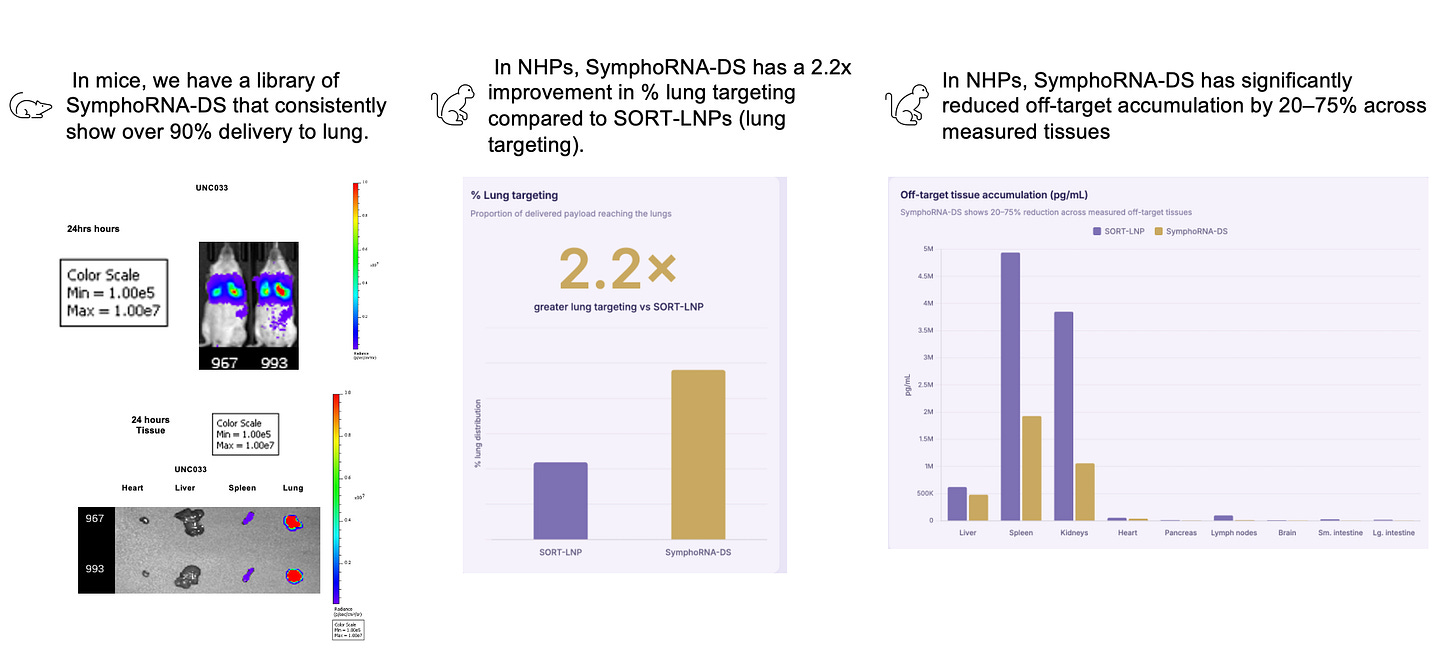
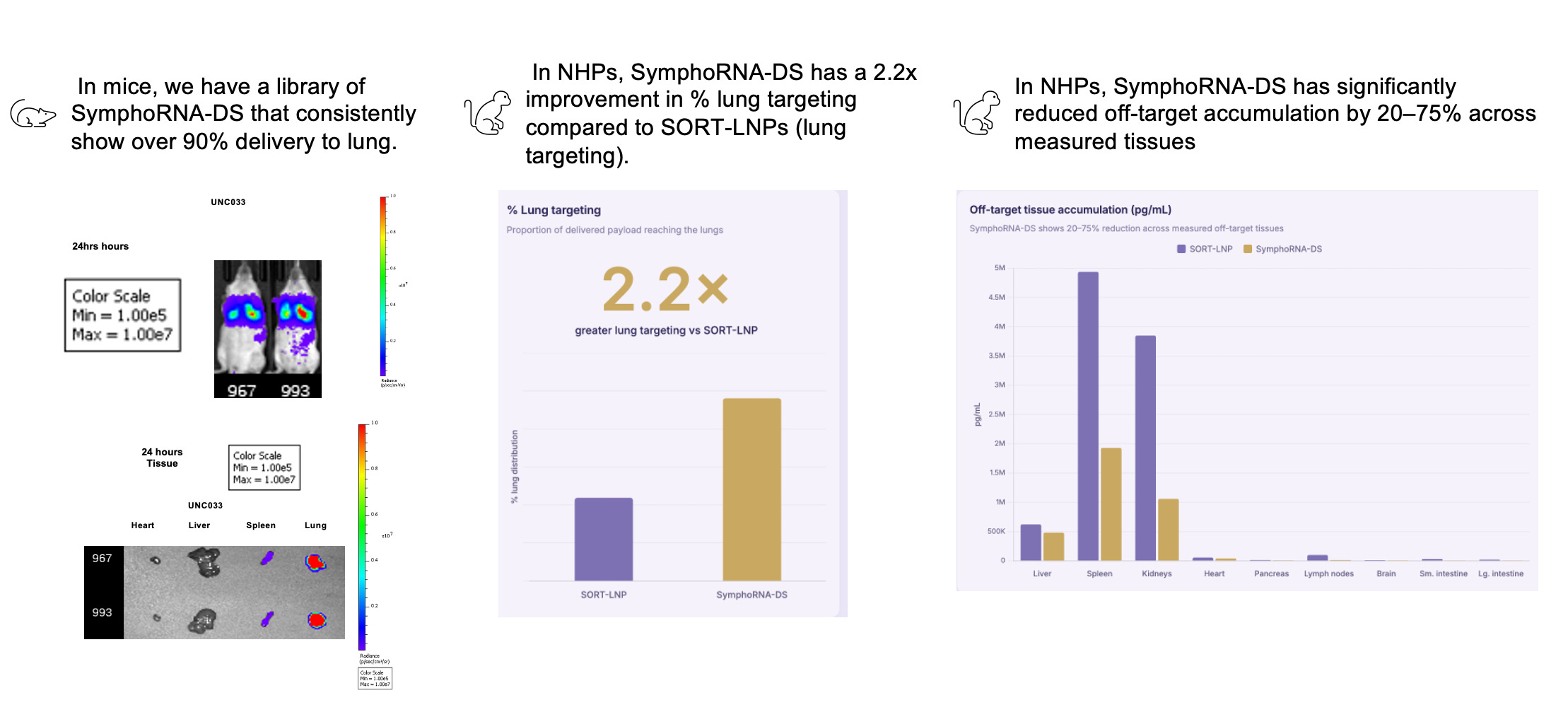
It targets the right organ. In mice, up to 99% of our payload reaches the lung. In non-human primates, our system achieves twice the lung delivery of the leading lung-targeting LNP, with substantially tighter reproducibility (32% coefficient of variation versus 72% for the LNP comparator) and lower distribution to off-target organs.
It enables sustained release. Unlike LNPs, our polysaccharide system enables sustained release of RNA payloads, extending the therapeutic window per dose.
It is stable at room temperature for over 50 days. No cold chain. No specialised storage. This matters enormously for global access and for the cost structure of chronic therapy.
It is radically cheaper. Raw material costs are up to 4,000 times lower than lung-targeting LNP.
And it carries multiple RNA types simultaneously. We have co-formulated mRNA and siRNA in a single polysaccharide particle and demonstrated that both payloads retain their activity. This is the capability that makes multi-RNA medicine possible.
From screening to prediction
The delivery system ensures the RNA reaches its target, but deciding which RNAs to use, and in which combination, is just as challenging.
The number of possible three-target combinations from 50 candidates is 19,600. Each combination can be synergistic, additive, or antagonistic, and the outcome depends on the specific ratios, the RNA modifications used, the delivery parameters, and the tissue context. And this is without factoring in the delivery system. This is where computation becomes essential.
General-purpose AI-bio breaks down here, for three reasons:
The most important data does not exist in public databases. GenBank can tell you which genes are expressed in lung tissue. The Human Protein Atlas can show you where proteins localise. GWAS studies can associate genetic variants with disease risk. None of these sources can tell you what happens when you simultaneously silence gene A with siRNA and activate gene B with mRNA in fibrotic tissue with delivery system D. That experiment has never been run by anyone else and its results are not sitting in any repository. The only way to generate that data is to run the experiments yourself.
The interactions are not predictable from component-level data. In our own work, we have demonstrated that our three-target RNA combination produces gene expression changes that are completely absent when any of the individual RNAs are tested alone. This is a fundamental property of biological networks: emergent behaviour at the system level cannot be reliably inferred from measurements of individual components. A model trained only on single-perturbation data will systematically miss the synergistic combinations that matter most.
The search space is too large and too expensive for brute force. Testing every possible three-target combination from our candidate list at £10,000 to £30,000 per experiment would cost £50 to £200 million to find the transcriptomic set we have today. By that time, we will have used it to identify new targets, new combinations, and new indications. Every combination we test generates a complete transcriptomic readout: a map of what every gene in the cell is doing in response to our therapy. This proprietary dataset, which does not exist anywhere else, trains models that predict which combinations will produce synergistic effects in which disease contexts. We are adding proteomic, phenotypic, and patient-level datasets as the platform scales. Each new data modality deepens the model. Every experiment makes the next one cheaper and faster.
This is what we are building toward: a closed loop between computation and experiment. Every combination we test generates a complete transcriptomic readout, a genome-wide map of how cells respond to our specific multi-RNA intervention. This is interventional data, not observational. It captures what happens when you perturb multiple pathways simultaneously in disease-relevant tissue. That data does not exist in any public dataset. It can only be generated by running the experiments.
Today, we use this data to identify patterns, rank target combinations, and guide experimental design. As the dataset scales, it will train models that predict which combinations produce synergistic effects before we run the experiment. The endstate is an AI that designs the optimal multi-RNA combination for a given disease context. We are laying the foundation now: generating the proprietary data, building the computational infrastructure, and closing the gap between experiment and prediction with every cycle.
There will also be an enormous amount of learning from the process of bringing the first multi-RNA therapy through development, which is why we focused on getting a first combination to clinic. The manufacturing challenges, the regulatory requirements, the clinical trial design, the biomarker strategy: this institutional knowledge compounds and creates advantages that a later entrant simply will not have.
Why now
Five forces are converging to create a narrow window for multi-RNA medicines.
RNA has become a proven modality. Billions of mRNA vaccine doses have been administered worldwide. Seven siRNA drugs are approved. Over 100 siRNAs are in clinical development. Late-stage vaccine products already co-formulate up to six mRNAs. Regulators and clinicians accept RNA as a viable modality for chronic disease. Five years ago, proposing an mRNA plus siRNA combination therapy would have been met with scepticism about the modality itself. That barrier is gone.
Pharma is increasingly interested. The RNA deal market has exploded. Lilly acquired Orna for up to $2.4 billion. BMS paid $1.5 billion for Orbital Therapeutics, a pre-clinical delivery company. Novartis licensed a single Phase II siRNA from Argo for $5.36 billion in total deal value. GSK paid $1 billion for Aiolos. AbbVie paid $2.1 billion for Capstan’s Phase I mRNA program. Over $10 billion in RNA deals in 18 months. These are not speculative bets. Pharma is facing $176 billion in patent cliffs by 2029. They need platforms, not just molecules.
Technology enables network biology. Transcriptomics, CRISPR-based perturbation screening, and AI now make it possible to map diseases as networks and design coordinated multi-target interventions. High-throughput DNA barcoding allows screening of dozens of delivery formulations per animal. Single-cell RNA sequencing captures gene expression changes at cellular resolution. These tools did not exist at sufficient scale or cost five years ago.
The disease burden is accelerating. Ageing populations, chronic inflammation, and metabolic disease are driving the incidence of complex diseases globally. Fibrotic processes alone are estimated to contribute to over a third of all deaths in the industrialised world, encompassing lung fibrosis, liver cirrhosis, kidney failure, and heart failure. Existing drugs plateau. The clinical community is openly calling for multi-pathway approaches.
No multi-RNA platform exists yet. The industry is taking small steps. Two siRNAs co-formulated here. Two mRNAs combined there. Nobody has built a platform that treats multi-RNA as the starting architecture: delivery system, combination engine, and computational design loop integrated from the ground up. Whoever builds it first will define the regulatory standards for the modality class, own the foundational dataset, and set the terms for partnerships.
The personalisation endgame
Here is where we get most excited.
Every patient’s disease is slightly different. The specific genes driving fibrosis in one patient’s lungs are not identical to the genes driving it in another’s. The relative contributions of different pathways vary by patient, by disease stage, by genetic background, and by environmental exposure. A 70-year-old former smoker with IPF has a different molecular profile than a 55-year-old with no smoking history.
Current one-size-fits-all drugs cannot account for this. They hit the same target in every patient, regardless of whether that target is the primary driver in their specific disease. This is one reason why response rates for most chronic disease drugs are modest.
Multi-RNA medicine opens a different possibility. The delivery system is modular: adjust the polysaccharide chemistry for lung, liver, or kidney. The RNA payload is programmable: swap targets without redesigning the formulation. The combination is tuneable: adjust the ratio of siRNA to mRNA based on the patient’s expression profile.
As we build our dataset, testing thousands of combinations across diverse cell models and patient-derived tissue, an AI engine learns which combinations work best in which biological contexts. Every experiment sharpens the model. Every new patient-derived sample adds a data point that makes the next prediction more accurate.
The endgame is a therapy designed for your specific disease network. Not one target. Not the same combination for everyone. A multi-RNA cocktail tailored to what your cells actually need, delivered precisely to the tissue that needs it, on a schedule your body can sustain, at a cost that healthcare systems can afford.
This is a long-term vision, not a near-term product claim. But every component of it, the modular delivery, the programmable payload, the AI engine, is being built now. And every experiment we run brings it closer.
Where we are
To get to the endgame, a lot of things need to happen across the clinical, regulatory, and diagnostic landscape. But we believe four things need to come first:
Prove multi-RNA is worth it.
Prove polysaccharides can deliver it.
Bring the first multi-RNA therapy to clinic.
Build the frontier AI engine around it.
In 12 months, we have shown multi-RNA is worth it and proven polysaccharides are the best delivery for it.
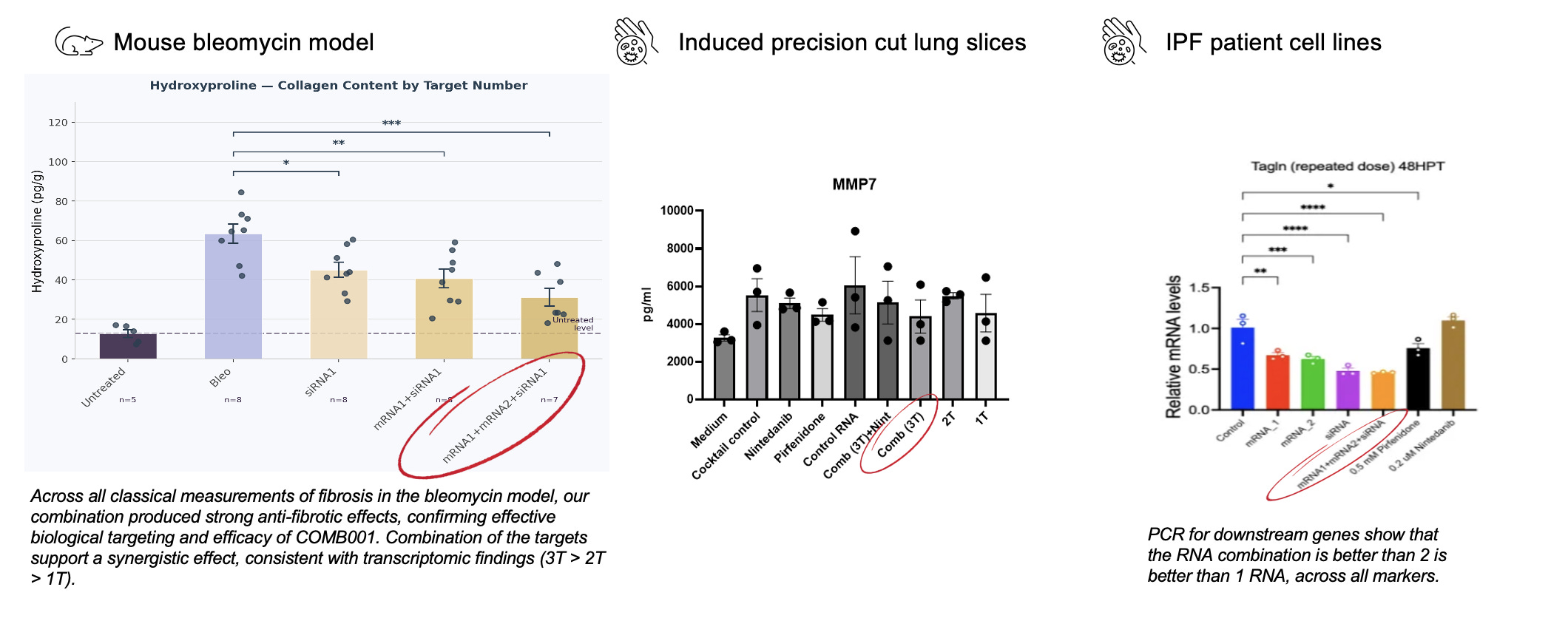
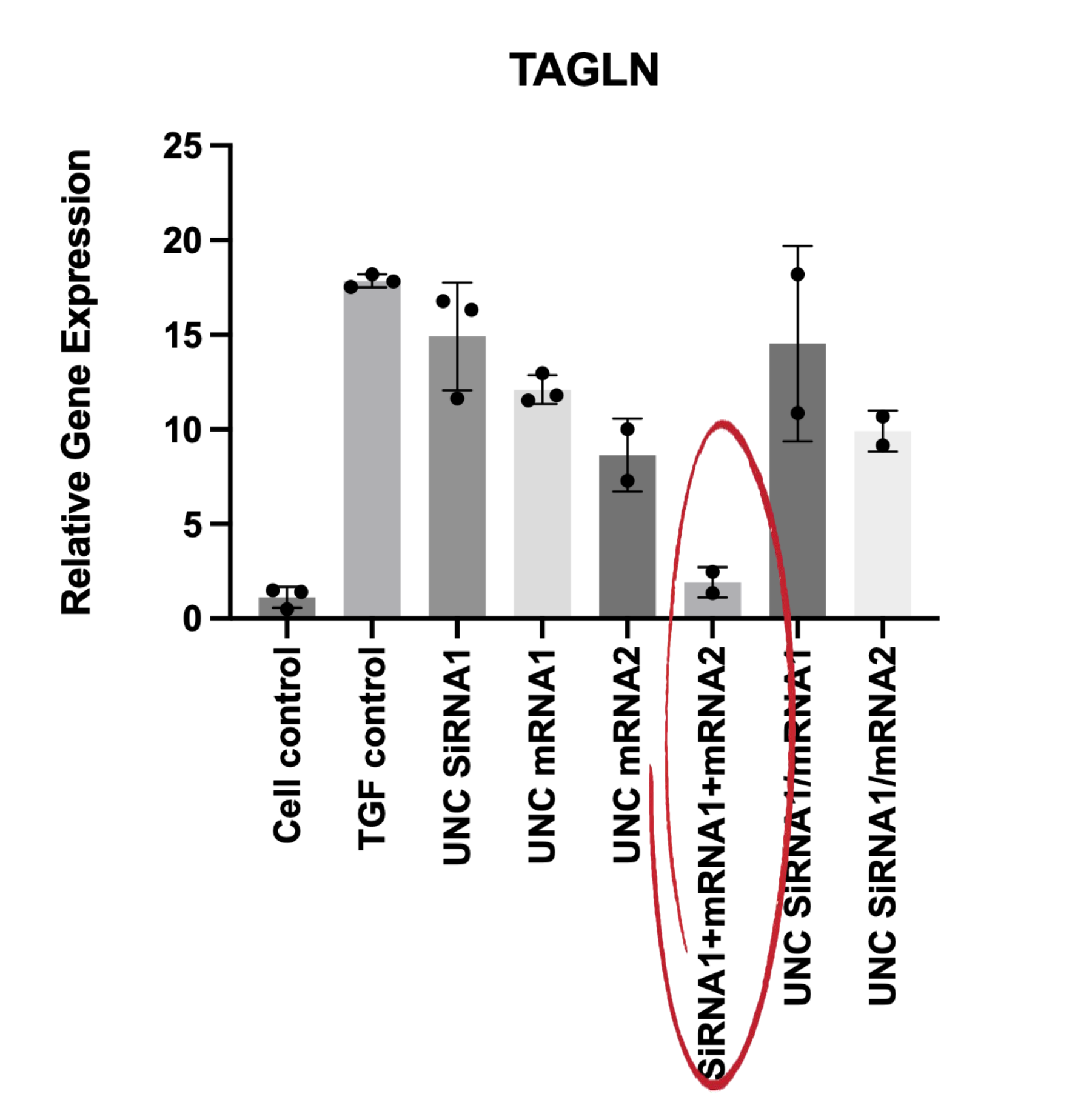
We went from no targets to showing our three-target combination beats single and double targets across models:
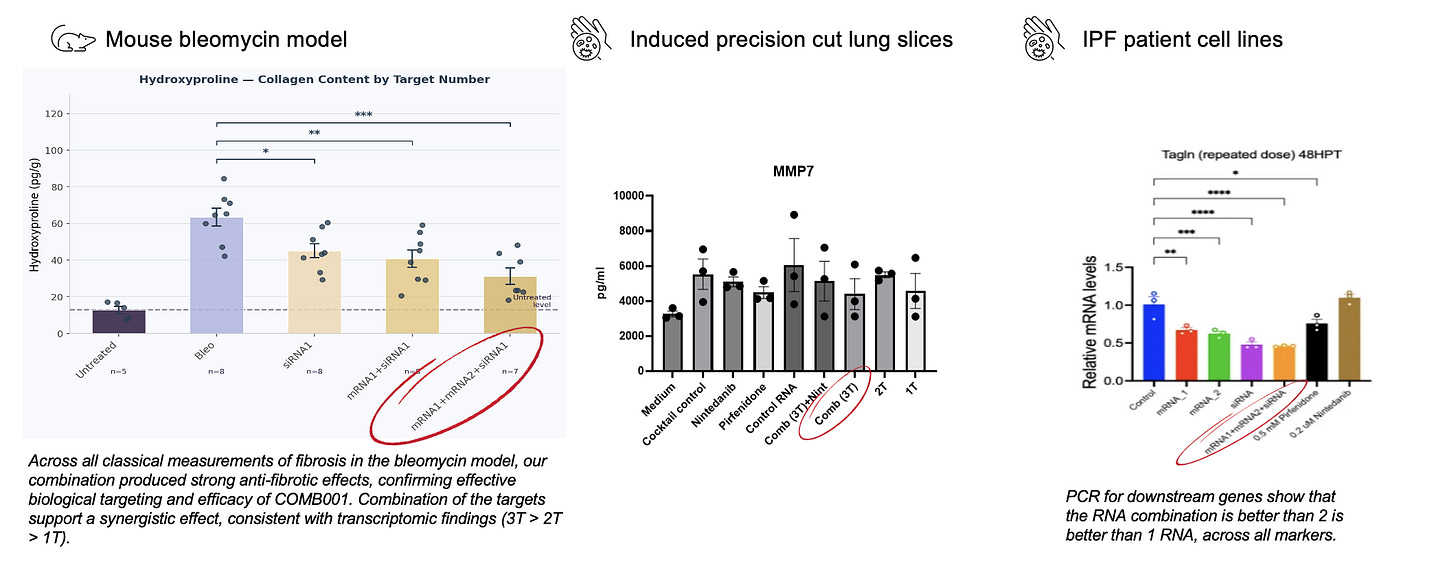
(a) Mouse bleomycin model (b) Induced precision cut lung slices generated by Fraunhofer-Gesellschaft institute (c) IPF patient cell lines – 2 doses
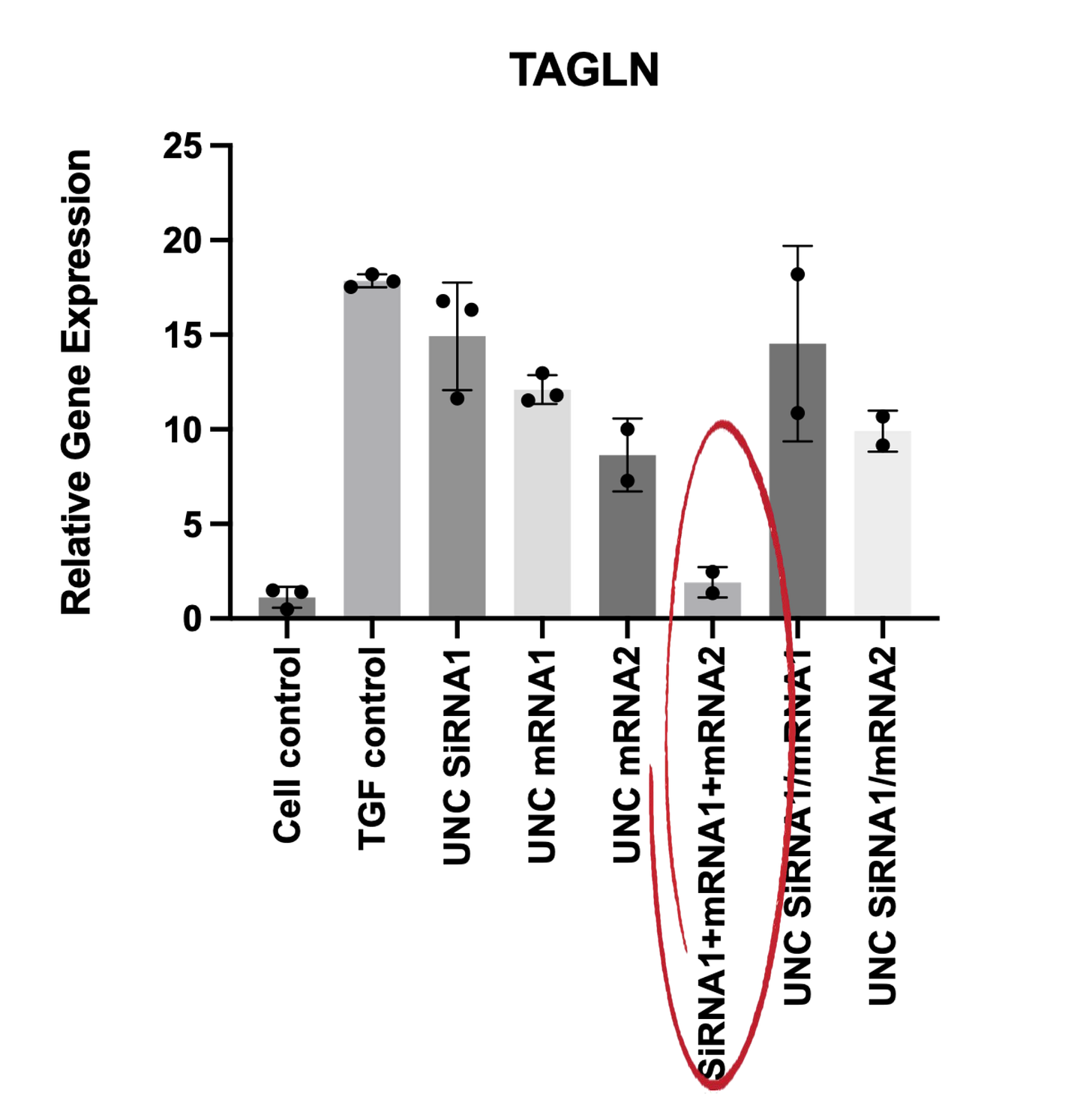
We showed it’s replicable in liver with the same targets:
We demonstrated 2X higher lung delivery in NHP than lung-targeting LNPs and up to 99% delivery to lung in mice:
We’re now set to bring the first multi-RNA therapy to clinic and build the AI engine around it.
Our team
As a founding team, we have worked together for nearly seven years. We previously built and exited a synthetic biology company, raising $50 million from investors including Max and Sam Altman, Balderton, Red Alpine and Lowercarbon Capital. We scaled production to pilot, grew to over 60 people, and exited. Seven of our current team members were part of that journey. They chose to build with us again.
Our delivery system was developed by a polymer chemistry team with a combined +85 years of experience and over 80 peer-reviewed publications. Our molecular biology group brings over +50 years of deep expertise in disease pathway modelling, RNA target design, and transcriptomic analysis. Our translational science lead has taken drugs from discovery to Phase II. The team spans polymer chemistry, molecular biology, bioinformatics, and biomarker discovery, drawn from institutions including Cambridge, Oxford, and the Francis Crick Institute. 85% hold a PhD.
Our advisors have operated at the highest levels of RNA therapeutics: former C-suite leaders at two of the world’s leading mRNA companies, clinicians who have taken multiple drugs in our lead therapeutic area from preclinical into the clinic, and specialists in CMC, fibrosis pharmacology, and computational drug design.
We have raised £2.4 million from Balderton, Saga Ventures, Apollo (Max and Sam Altman), East Innovate, and Heartfelt.
RNA is the programming language of the cell. For the first time, we can write to it in both directions: silence what’s broken, activate what heals, simultaneously and precisely. The compiler for multi-target RNA medicine does not exist yet.
We are building it.